Saturday, May 8, 2010

Language Translation is So Sexy!


From the New York Times: ""For the last two years, the Shanghai Commission for the Management of Language Use has been trying to clean up English-language signs and menus to rid them of their malapropisms, like these examples."

I spend most of my weeks teaching English to adult immigrants. It's hard work, and beyond my wonderful, grateful learners, often a thankless job. So, sometimes a little humor is in order.

The New York Times has several more examples available here.

Happy weekend!

Friday, May 7, 2010

British Elections as Dharma Lesson


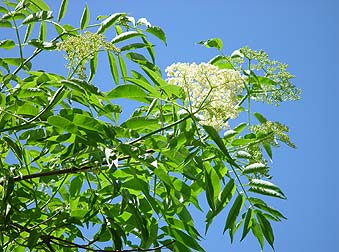
I woke up in the middle of the night to a cold room and the beginnings of a cold. A few years ago, I started the practice of immediately taking some elderberry tincture at the first signs of a cold or sore throat. It's a powerful plant, and usually does the job.

After taking my medicine, it was clear I'd be awake for awhile, so I turned on the radio and listened to commentary on the British elections. One might say that I'm a bit of a political junky, although I'd just call it an interest in what's going on in the world, knowing it will impact us all in some small or great way.

Anyway, for those of you who don't know, Britain isn't used to trying to cobble together a coalition government, which is what they have to do now. The BBC reporters repeatedly spoke of how people are used to having an election one day and a "smiling new Prime Minister" the next. What was so interesting to me was how the coverage was so dramatic, and felt similar to that of the disputed Presidential Election in the U.S. ten years ago. In addition to the "smiling Prime Minister" comments," there was also repeated efforts to distinguish Britain from the rest of Europe. "We're not used to European-style elections." "This happens in Europe, but not in Britain." Statements like this. Eventually, I fell asleep again, but obviously an impression was made that I can write about now, six hours later.

This morning, I thought: Isn't this just like how our minds work! Always making everything into some special case that has to do with who we think we are. People often accuse the United States of being a nation filled with self-absorbed people who know little about the world around them. There's some truth to that, but I think it's also true that every nation or large body of people reflects to some degree the very "illnesses" Buddha saw afflicting all of us as individuals, namely that we think we are special, better or worse than, and completely separate from others around us.

The drama currently unfolding in Britain, including the potential negative economic impact, is both a real issue in the relative world and also a grand example of the kinds of disturbances that arise and fall in our minds everyday. It's a little bit like getting a sore throat - maybe it will lead to a long, terrible hardship, but probably not. And really, when you look at the long view, that hung parliament or sore throat are just manifestations of something that's been developing for a long time. Karma coming to fruition.

Every single event is both a blossom of the past and a life of it's own.

Thursday, May 6, 2010

Faith isn't for the Nearest Dumpster


These words from Marcus' latest post seem very important this morning:

I’ll happily admit to being a beginner. I’ve tried, but cannot reach the most difficult philosophical heights of the Dharma. I’ve been to many Buddhist discussion groups where I’ve been lost at the complexity of it all. And I’m rubbish at meditation. But I look around at the good people in the temples, in Thailand and Korea, the places I know best, and see that Buddhist life is the precepts, generosity, chanting, and reliance upon the Buddha. That is enough. And difficult enough.

So faith is vital to me.


It's too easy to dispose "faith" into the nearest dumpster, feeling it's only for those "God" folks. But I think all of us, secular, religious, spiritual, or whatever - all of us need to place faith in something greater than ourselves in order to live healthy lives.

Chanting to myself silently on the bus this morning, I came to the lines about sangha in the refuges -

I take refuge in sangha. May all beings support harmony in the community, free from hindrances.

There have been times I've felt myself stuck on this line, seeing it as reinforcing excessive niceness and passivity.

However, this morning, it feels more like a calling from the world to see that even in the middle of conflicts and confusions, there is always a certain "harmony" present which is "free from hindrances."

I've felt very haunted by life lately. Not a haunting of personal, past experiences, but something bigger and less defined. I can feel it in my heart, in my breathing - what is it? This harmony perhaps, trying to break through the mud caked over it perhaps?

During a podcast with poet and spiritual writer David Whyte, he spoke of how in order to truly awaken, he feels one needs to experience an exile from one's self. I'm still sitting with that one because it feels really accurate, but kind of odd at the same time. Reminds me of a talk I had with one of my senior dharma sisters at our center. At one point she told me, "whatever all this is you're going through, you might never get any more clarity about it."

This points to, in part, I think this exiled quality - that there are some things in life that just remain mysterious no matter what we do to try to figure them out.
This post feels like that. May you not throw faith in the dumpster because sometimes, it's all you have.

Wednesday, May 5, 2010

On-line Sangha Life - Is that so last year?


Here's an interesting post I stumbled upon about blogging, writing, and personal/professional goals behind blogs. It got me thinking about discussions awhile back concerning whether Buddhist blogging, chat rooms, and collective sites (like The IMC Community)constitutes an on-line sangha.

The longer I have spent blogging, the more I have seen how fickle the on-line world can be, even amongst us "Buddhist-types." Individual bloggers come and go. On-line communities come and go. Sustaining conversations about much of anything for longer than a week or two seems challenging at best, and sometimes next to impossible. Or, when something does get a lot of focus, it tends to be that which is dramatic and highly charged, like taking good old Genpo Roshi and his buddies down a few pegs.

On the flip side, there are more and more teachers doing online classes and workshops. And there are long running forums like Zen Forum International and communities like Treeleaf which seem to offer some of the stability and consistency you might see in a brick and mortar sangha.

Regardless of the amount of change, there is a beauty in sharing with others something you have learned, or are confused about, or just curious about. This can occur without more formal bonds, just seeming strangers sliding into each others' lives for a few minutes.

But I also wonder about all that talk about online sangha life. Was that just last year's bit of dukkha, or has it just transformed into something else?

Tuesday, May 4, 2010

The Requirement of the Moment"


A few people found some of my recent comments about human reason and Buddhist practice questionable. I can understand this. Yet, the more I reflect on it, the more valuable it seems to me to keep questioning "calls for reason."

Here's a small segment of a post by Ajahn Sumedho on the blog Buddhism Now:

If we are intellectual, we are always up in the head, thinking about everything. Emotionally we might not be developed at all-throw temper tantrums, scream and yell when we do not get our own way. We can talk about Sophocles and Aristotle, have magnificent discussions about the great German philosophers and about Ramakrishna, Aurobindo, and Buddha, and then somebody does not give us what we want and we throw a tantrum! It is all up in the head; there is no emotional stability.


I'd like to offer the following statement for consideration. Many of us well educated in the academic sense types are attached to reason. In fact, even though Buddhist teachings point us beyond our own thoughts and understandings, we're so comfortable in the realm of reason that we think it is the answer to all of our "problems." That if we just think things out better, analyze things a little more rationally, we'll break through the confusion and emotionalism, and figure it all out.

Barry over at Ox Herding took up fear this morning in a way that I think could add to what I'm considering here.

Recently my teacher said:

Fear is the absence of presence.

I don't often experience the quivering of full-on fear, but I'm well acquainted with its young sibling, anxiety.

And when I look into the familiar, queasy feeling that comes with anxiety, I sometimes can see the refusal embedded within the feeling.

It's my refusal to show up to the requirement of the moment.


It's this last sentence that I keep going back to. When I made the statement that I didn't think reasoned out arguments about immigration would be of much service in the current political climate, it wasn't because I have, or want, to give up on it all. No, it's about stopping and wondering what the "requirement of the moment" truly is. Is it more data and analysis? Is it deep listening? Is it marching in the streets? I'm not sure.

However, what is clear to me is how many of us "educated" types can come up with a myriad of ways to emphasize reason, and discount and/or diminish everything else. Oh, all that talk about emotions is fluffy, new age shit! Oh, why can't just be more reasonable! What good will all this focus on intangible things do (insert all things emotional and spiritual here) when the world is falling apart?

All of this just points to imbalance in my view. We need not toss out the wonderful skills of human reason to appreciate the wisdom that comes from other sources, including emotions we'd just assume be rid of. Yet, so often, we do, hanging hard on reason until it breaks, and then getting wildly emotional because we don't know how else to respond.

It's pretty screwy if you ask me. Why not strive for some balance, and having a tool box with many types of tools in it, because certainly the requirement of the moment keeps on changing, doesn't it?

Monday, May 3, 2010

Trying to "Handle" One Another


A sangha friend just made the following comment on a recent post I made on Life as a Human:

The phrase, "Some people don’t really know how to handle The Birdman", caught my attention. By your artful telling, the Birdman cant' be handled at all. Perhaps suffering stems from trying to 'handle' one another?


It's funny. I was feeling like I wanted to write something today, but really couldn't come up with anything. And then this comment came. It feels right on.

What's interesting is that when I think of this "handling" that we all seem to do sometimes, there are a few components to it.

First, there is the obvious desire for control. You want someone or a group of someones to act a certain way because it will make your life easier, make you feel more comfortable, etc.

Second, there is the anxiety of being out of control.

And finally, though, is something kind of surprising because it flips over the view that this behavior is all about trouble. Behind wanting to "handle" someone is a desire to know them, to know what they are going to do, what they think, how they feel, to know how they tick. When you start to examine your misguided behavior, I do think there is an element of wanting to see and experience how we are interconnected behind it, even when we are terribly out of whack.

But when we seek to "know" someone, we're trying to fix a certain image of them, just as we go about our day trying to fix certain images of situations we experience.

Part of the reason I felt compelled to write about The Birdman is that his uniqueness easily stands out, and one of the teachings he gives just by being himself is that we can't pin each other down, can't really ever completely get "a handle" on who each other is.

An old girlfriend of mine used to say "I know you, I know you," but she really didn't, nor could I know her like that. Both of us believed those lines too much, and it probably was a main reason why the relationship didn't last.

Life is full of opportunities to drop this desire to know, and thus be comfortably "in the know." Maybe this quality is what Dogen was pointing to when he said "he dropped off body and mind."

Sunday, May 2, 2010

Arizon Immigration Law and Buddhism - II


Was out hiking at a local state park yesterday, and enjoyed a computer free day. No e-mail. No blog. Nothing It was excellent!

Came back to find a comment challenging my post on the Arizona immigration law. I was surprised that there weren't more, but anyway, I'd like to address this comment.

You know it is easy to say that the new Arizona law is racist. Harder, I think, to back that up. What is racist about it? You are aware, of course, that the majority of the police officers responsible for enforcing this law and most of the Sheriffs and Chiefs of Police in Arizona are Hispanic, are you not?

Unfortunately, this is a issue that involves race. You can’t get around it. The problem is not that we have large groups of white Europeans flooding across our borders illegally. How else can you address this situation from a law enforcement standpoint without looking at a person’s race?

I am both a liberal and a Buddhist, and I have mixed feelings about this law. The feeling that seems to override all others is the sense that people are reacting to this emotionally and not rationally. How does this law go against Buddhist teaching? Tell me how.

Nagarjuna, in the Ratnavali, says: “Having examined and identified particularly hateful murderers, you should send them into exile without killing or harming them.”
What he is saying is that those who break the law should be dealt with, sans vengeance, and that compassion is not about turning one’s head and allowing people to break the law. What is compassionate about allowing people to engage in illegal activity? That is just as harmful.

Everyone is agreed that illegal immigration is a problem. Those who don’t like this law should come up with a better solution, instead of making things worse with emotional protests. I, for one, have always valued the right to protest. In this case, I just feel its distorting the issue.


First off, I have to say I find that too many "Westerners" reduce Buddhist practice to reason and rationality. I just don't buy that view. Human reason is a powerful thing, but it fails us more often than not. Anyone who has has studied koans would be able to attest to this, but I think there's enough mystery in daily life for all of us to see this, if we only bothered to pay attention.

You'll have to forgive me if this particular issue - immigration policy and how native born people treat immigrants - gets to me. It does. I'm not completely objective, but who the hell is? Objectivity is just another story in my opinion, something people like to think they possess, but which they don't. This doesn't mean that everything is relative, and that every viewpoint is equally valid. It's more about how flimsy our ability to grasp the vastness of life is, and how the narratives we have about it are always partial, pointing to the moons kind of narratives.

So, back to David's comments.

"Nagarjuna, in the Ratnavali, says: “Having examined and identified particularly hateful murderers, you should send them into exile without killing or harming them.”
What he is saying is that those who break the law should be dealt with, sans vengeance, and that compassion is not about turning one’s head and allowing people to break the law. What is compassionate about allowing people to engage in illegal activity? That is just as harmful."

Let's look at the definition of "illegal activity." If you're speaking about entering a nation without documents, it's true, undocumented people are breaking the law. However, you never hear anyone screaming about undocumented Canadians in the U.S., or undocumented Irish, just to give two examples of predominately white groups of undocumented people. When you add up the numbers of undocumented people from Canada, Europe, and Australia, all places white predominantly white populations, they probably represent between 20-30% of the total undocumented persons. So, the outrage we see against Latino/Latinas is skewed in my opinion.

If your looking at serious crime being committed by undocumented people in the U.S., you know, like the drug running, rape and murder variety that scares the shit out of people, the whole "illegal activity" argument falls apart. The view that undocumented people commit more violent crime than native born people is a myth.

But in all the furor, there is this hitch: The perception of high crime rates by illegal immigrants is pure myth. And it is misdirecting public policy about what we really should do to stop illegal immigration. A century of studies has consistently shown that recent immigrants are in fact less likely to commit a crime or be in jail than native Americans.

The last comprehensive national report, by Ruben G. Rumbaut, Walter A. Ewing and the American Immigration Law Foundation, found two years ago that while the number of unauthorized Latino immigrants in the country doubled between 1994 and 2005, violent crime during the same period dropped nearly 35 percent.


White Americans seem all too willing to ignore the past. My own Irish ancestors probably experienced the same kinds of stereotyping and discrimination during the 19th century, as did my Polish ancestors. U.S. immigration laws (or civil service practices, which often overrode the law) were stacked against Italians and Eastern Europeans for decades, and for many of these people, the only significant benefit they had in the U.S. was being white in a nation run by white people.

When it comes to people of color, regardless of country of origin, the U.S. immigration laws were always stacked against them historically, and currently are only friendly to chosen groups of refugees from nations we have either negatively impacted through war (Somalia, Ethiopia, Laos, and Vietnam come to mind), or which are considered nations providing well educated people who can more readily fit into our high tech, post industrial nation (India and China immediately come to mind). Of course, most of us rarely consider the brain drain effect when it comes to this kind of immigration, which is often fueled by U.S. corporate recruitment.

When it comes to Latin Americans, many of whom have experienced devastated economic and social conditions in their home nation, in part due to U.S. sponsored warfare and/or influx of U.S. multinational corporations, the immigration laws are basically a closed door in the face. Periodically, there is a short window open, such as when natural disasters occur, but usually this is a temporary opportunity with no guarantee of a path towards citizenship.

So, these are the kinds of reasoned out arguments I have made for years. And I think when people actually examine both our history, and what's happening now, they stand up for the most part.

But you know what, when it comes to this issue, most people just say I'm a fucking "bleeding heart" and call it a day. David wants people like me to be reasonable, and he is also acting reasonable in his comments, but what good does it do when emotional reactions rule the day?

Having worked in immigrant communities for over a decade now, I've heard enough stories about peoples' lives to know that it's all terribly complex, and black and white laws can never address the myriad of issues involved.

David asks me to be compassionate and stop people from breaking the law. Well, what about people making laws that are discriminatory in the first place? Shall I give them a pass. And what is true compassion in this situation?

I find that those who support these kinds of laws or who get uppity about "national borders" and "those black and brown" people "breaking the law" tend to have little or no experience with said people. They not only know little about the struggles, challenges - eh, absolute misery - involved in completely being uprooted from your homeland and moving to a foreign country where you have no idea who will offer a tiny bit of support and who is going to spit on you, shoot at you, and run you out of town.

And the same people aren't willing to admit that our country often has some responsibility for the destabilization of these peoples' lives, and that if we want to have move people from Latin America staying in their home nations, we have to be willing to change our business practices in their nations, and also change our love of military interventions (both overt and covert) in their nations as well.

Most people would rather stay home, not leave their families behind to go trekking through a deadly desert just for the opportunity to cross into the U.S. The dreams these people have of America are often dreams of desperation, fueled by basic human hope and dire poverty.

As to David's question of how this law goes against Buddhist teachings, I'm not sure if this is even the right question. We could go back and forth getting with witty citations of Buddha, Nagarjuna, and any number of others, but does any of that truly lead us to being more present to the people who are, right now, regardless of how they got here, our neighbors?

I could easily go on and on with various comments on teachings, stories of people I have met, statistics, and whatnot - spend hours trying to construct the perfectly balanced post that includes the rational, emotional, and spiritual elements of this issue, but in the end, I have to agree with you that the emotional is so ramped up that it drowns out everything else.

So, maybe instead of just saying "be more rational," which I think is more about being a certain well-loved Star Trek character than being human, maybe we should all slow down, reflect, and meditate on the roots of the emotionality on all sides of this issue.

The main reason I stand against laws like the one in Arizona is that they are reactive in nature, done out a desire to please and appeal to the reactions of others. If Buddha taught us anything it was to consider carefully both the situation at hand and the potential consequences of any actions being done to try and remedy that situation.