Showing posts with label poetry. Show all posts
Wednesday, September 16, 2015
Letting Your Opinions Fly Like Birds
We humans tend to cherish our opinions. Sometimes, we'll do anything to either protect them or make them known in the world. It can get so bad that people will destroy relationships and even kill each other over their differences.
It doesn't have to be this way.
"If you wish to see the truth,
then hold no opinions for or against anything."
"Trust in Mind" (Xinxinming), Zen Master Seng Ts'an
Having no opinions at all about anything is the opposite of being strongly opinionated. And on the surface, it appears that these lines are directing us to have no opinions. Which really isn't a much better position.
However, that's not what the poet is advocating here.
Take a look at those first words - "If you wish to see the truth." How often do you truly wish to see the truth? And how often do you do anything in your power to turn away from it?
This line seems to point at the choice that's required of each of us in every moment to want to see the truth. We have to aim ourselves in the right direction. Or, more accurately, allow ourselves to be aimed in the right direction by life itself. If we're too busy being obstructionists, or propping up arguments about ourselves and others, there's no room for the truth to seep in.
In the second part of the line, the word "hold" stands out. Recently, I was in a conversation about politics, and felt myself holding tightly to my particular opinion. I noticed how that tightness manifested in my shoulders and lower back, and how the guy I was talking with seemed to be mirroring me - tightening around his own opinion. So, I decided to pull back, and let go of the point I was trying to make. We continued to talk, and I fairly quickly experienced an uncoiling of that tightness as breath calmed, and my need to be right diminished.
This letting go didn't mean I gave up what I thought and went along with his view. It meant that I stopped trying to control the outcome of the conversation, and allowed our differences to be present in the same space.
How can you treat all opinions like this? Let them be birds, floating across the mind's landscape: accessible, able to be conveyed, but also free to pass on through at any time. If you do so, it's more likely that whatever truth contained within will be able to come forth and shine.
Labels:
body-mind,
clinging,
conflict,
letting go,
opinions,
poetry,
politics,
self cherishing,
zen
Sunday, August 23, 2015
Buddhist Tensions: the Poetry of Ho Xuan Huong
Picking Flowers
If you want to pick flowers, you have to hike.
Climbing up, don't worry about your weary bones.
Pluck the low branches, pull down the high.
Enjoy alike the spent blossoms, the tight buds.
Ho Xuan Huong (1772-1822 / Vietnam)
Vietnamese poet Ho Xuan Huong was a powerfully independent and outspoken woman living at a time when that was very rare. The energy and mastery of her poetry was so high that it helped elevate the status of Vietnamese to that of a literary language. Although her words are infused with Buddhist understandings and images, Ho Xuan Huong had a defiant, highly critical relationship with the Buddhism of her native Vietnam.
One of the tension points present in her work revolves around sex and sexuality. She was a frequent critic of the pious sounding Vietnamese monks who scoffed at women expressing themselves sexually, but then courted and slept with female devotees and concubines. In addition, she fiercely questioned the double standards of a patriarchal society where men did as they pleased when it came to romantic relationships, while women were confined to roles of dutiful quietude.
Ho Xuan Huong was anything but quiet about sexuality, as the following poem attests.
Swinging
Praise whoever raised these poles
for some to swing while others watch.
A boy pumps, then arcs his back.
The shapely girl shoves up her hips.
Four pink trousers flapping hard,
two pairs of legs stretched side by side.
Spring games. Who hasn't known them?
Swingposts removed, the holes lie empty.
Many of Ho Xuan Huong's poems read like expressions of freedom. Not longing for it, but actually living and breathing it. If you want to pick flowers, you have to hike. Climbing up, don't worry about your weary bones. Literally, there's the experience of climbing up a hill or mountain. Where I'm living right now, there is a small mountain that the locals like to climb to get exercise and look out over the city in the valley below. I have climbed to the top multiple times. Every time, there has been a point where I consciously chose to be ok with having some aches and pains, and then - as if by magic - I experienced a jolt of renewed energy that helped me reach the summit. Metaphorically, the same lines of the poem can taken as a directive for life. If you want to reach your dreams, you have to let go of fretting and obsessing over every, little obstacle that appears along the way.
As many great poets do, Ho Xuan Huong captures beautifully the fleeting quality of our lives. Particularly that of high moments, and how a wrong decision while on top of the mountain can bring you tumbling down. In another poem laden with sexual images and tension, Huong offers both high level pleasure and a caution to not go too far.
The Jackfruit
I am like a jackfruit on the tree.
To taste you must plug me quick, while fresh:
the skin rough, the pulp thick, yes,
but oh, I warn you against touching --
the rich juice will gush and stain your hands
Beyond pleasure, the richness of the natural world explodes from Huong's poems. Clearly in love with all the wonders of the waxing seasons, spring and summer, she readily invokes the beauty and vibrancy of each in her words.
Spring-Watching Pavilion
A gentle spring evening arrives
airily, unclouded by worldly dust.
Three times the bell tolls echoes like a wave.
We see heaven upside-down in sad puddles.
Love's vast sea cannot be emptied.
And springs of grace flow easily everywhere.
Where is nirvana?
Nirvana is here, nine times out of ten
Here, Huong offers a poem that appears to be passive, but actually is active and full of tension. A gentle, somewhat melancholy start paired with a fierce, declarative ending. Talk of sadness coupled with the deepest expression of love itself.
Overall, she leaves us with an overriding message pointing directly to spiritual liberation. One that isn't separated from the seemingly mundane and material world around us. The pulpy jackfruit is love. The sad puddles are love. The hike to pick flowers is love.
And love is liberation. Available to all, regardless of who we are perceived to be (or not be) in the world.
Labels:
earth,
Ho Xuan Huong,
liberation,
nature,
poetry,
sex,
sexuality,
spring,
Vietnamese Buddhism
Saturday, March 14, 2015
The spring breeze is our every breath
The world before my eyes is wan and wasted, just like me.
The earth is decrepit, the sky stormy, all the grass withered.
No spring breeze even at this late date,
Just winter clouds swallowing up my tiny reed hut.
Zen Master Ikkyu, 1394-1481
Many years, we here in Minnesota are still being swallowed up by winter clouds. This year, not so much. All around, the trees are budding. The lingering snow and ice is melting. And the air is filling with the songs of returning birds.
The same might be said of how people experience awakening, enlightenment. Most of the time, it seems to be some thing distant, buried under the snow of our sufferings and attachments. However, it need not be that way. Even in the worst winter storm, there is a spring breeze waiting to be discovered.
Ikkyu stands exactly where he is in this poem. There's not much desire for something to be radically different, just description and acceptance of what is. And also weariness. A weariness that isn't what it seems to be.
The spring breeze that isn't in the relative moment is fully alive in Ikkyu's heart/mind. In the poem, it breathes a love into everything that is, just as it is. And in doing so, he moves beyond being owned by that relative reality.
That weariness isn't of a man who's been beaten down by the world. As I see it, it's of a man who has grown tired of riding the emotional tides of life's endless changes.
Whatever comes, he's ready to embrace it.
I must remember that the budding trees will someday be rotting logs. I also must remember that the rotting logs contain budding trees.
The spring breeze is our every breath.
Labels:
eight worldly winds,
Ikkyu,
impermanence,
poetry,
spring,
winter,
zen
Friday, September 26, 2014
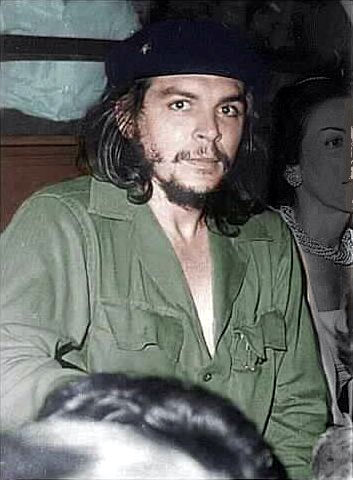
Che Guevara, Buddhism, and Jumping to Conclusions
What the hell does Che Guevara, the infamous Cuban revolutionary, have to do with Buddhism? I'm guess it's probably never been on the radar for most of you, and I'm also imagining that the very mention of the name sparks powerful reactions for some of you. Freedom fighter. Compassionate doctor. Communist troublemaker. Armed terrorist. Maybe one or more of these phrase fit how you place him. Certainly, the man has been romanticized on the one hand by people on the left who sport t-shirts with his image, and/or have seen movies like "The Motorcycle Diaries" or who have read his writings about the impact of colonialism, capitalism, and the dream of a unified American continent (north and south). Whatever the chosen image, he almost always seems to be larger than life.
As part of my continued exploration of Latin American Buddhism, I'm reviewing some articles from the Spring 2001 issue of Turning Wheel, the magazine of the Buddhist Peace Fellowship. Thanks to the Jizo Chronicles for the reminder about this issue of Turning Wheel, which I had, long forgotten, tucked away in my closet.
Lourdes Arguelles, in her guest editorial, writes of a humid Cuban day in late 1959 when she, as a high school student, was sitting on the steps of the University of La Habana, reading a book of Pablo Neruda's poetry. She says she was waiting to march in one of the many demonstrations that occurred at that time in Cuba when she looked up and say Che Guevara standing next to her and her friends. He asked what she was reading, and after some approval of Neruda on his part, she said she, for some reason asked him "Someone once told me that Neruda had lived in Asia and was interested in the Buddha. Do you know if he has anything written about that?"
Arguelles goes on to say she really didn't know why she had asked him that, of all things, and how her friends wondered, in amazement, why she spoke of the Buddha of all things to this powerful political figure. And then she writes that a few weeks later, her father, who worked closely with Guevara at the time, arrived home one day with a package. It was another book of poetry, with a letter in it that said "Che said to tell you he looked very hard for what you wanted but couldn't find it. He sends you another book of Neruda poems for your collection." What's totally interesting to me is that her father knew nothing of the earlier exchange; he simply brought the message and book home to his daughter.
Now, maybe this is just a nice story, you might say. In fact, some of you might think it's propaganda to support a more positive image of the man. Whatever you think of Guevara, it's worth noting that this story is a great example of how people - especially well known people - are usually much more than we see. The human mind tends to compartmentalize well-known people, or even people we know, by ignoring the whole picture, or assuming there's nothing beyond what we know.
This iconic figure who sought an end to capitalism and injustice globally, and who also relied heavily on violence measures to do so, was also just another person in the world. This simple act of kindness on Che's part, never mentioned in the biographies and love-ographies or hate-ograpies, brings him back down to earth. It's also the case that we could probably easily find stories about the guy making mundane mistakes, which again would temper the dramatic, larger than life character he has become.
It seems to me that it is our job, as Buddhist practitioners, to drop off all pre-conceived stories about both those in our lives, and about those who lived in the past, and to be ready and open to be surprised. This story of Arguelles provided a moment of surprise, an opportunity to shake the story I had about Guevara as solely a sometimes inspirational, sometimes destructive revolutionary. Maybe he had no interest whatsoever in the Buddha and his teachings; that's irrelevant. What is relevant is that he took the time for this young woman, even if that effort was at least partly motivated by ties to her father or to desires that she would support his politics. She wasn't anyone important, so even if his motives were tainted in the ways I just suggested, it really didn't benefit him much. So I see this as an act of caring. Someone asked him about a writer he loved, and he tried to find something else out about that writer for the other. As a writer who loves many other writers, both living and dead, I completely get this act. I've done it myself, without any belief that I would gain by locating information about writer X.
Maybe this is a somewhat naive take on this situation, but I really don't get the sense that Arguelles is lying about her story. She finishes up her introduction to the issue of Turning Wheel saying that even though she has rejected Che's "modernizing and violent insurrection philosophy" and that his efforts brought "grief" to her life and the lives of countless others, she nevertheless dedicated the issue to his memory.
He clearly left a powerful impression on her as a teenager, with that simple act of kindness. And I offer this to you now as an effort to shake those images you have of whomever you have deemed "evil" or "horrible beyond repair." We are never solely our worst acts, or our best acts even. Our actions in total are the ground upon which we stand. May we remember that every day, for the rest of our lives.
And just for your reading pleasure, here's a favorite poem of mine from Neruda entitled "Ode to the Lemon." Enjoy!
Ode To The Lemon
by Pablo Neruda
From blossoms
released
by the moonlight,
from an
aroma of exasperated
love,
steeped in fragrance,
yellowness
drifted from the lemon tree,
and from its plantarium
lemons descended to the earth.
Tender yield!
The coasts,
the markets glowed
with light, with
unrefined gold;
we opened
two halves
of a miracle,
congealed acid
trickled
from the hemispheres
of a star,
the most intense liqueur
of nature,
unique, vivid,
concentrated,
born of the cool, fresh
lemon,
of its fragrant house,
its acid, secret symmetry.
Knives
sliced a small
cathedral
in the lemon,
the concealed apse, opened,
revealed acid stained glass,
drops
oozed topaz,
altars,
cool architecture.
So, when you hold
the hemisphere
of a cut lemon
above your plate,
you spill
a universe of gold,
a
yellow goblet
of miracles,
a fragrant nipple
of the earth's breast,
a ray of light that was made fruit,
the minute fire of a planet.
*Note, an earlier version of this post appeared on Dangerous Harvests on 11/29/09
As part of my continued exploration of Latin American Buddhism, I'm reviewing some articles from the Spring 2001 issue of Turning Wheel, the magazine of the Buddhist Peace Fellowship. Thanks to the Jizo Chronicles for the reminder about this issue of Turning Wheel, which I had, long forgotten, tucked away in my closet.
Lourdes Arguelles, in her guest editorial, writes of a humid Cuban day in late 1959 when she, as a high school student, was sitting on the steps of the University of La Habana, reading a book of Pablo Neruda's poetry. She says she was waiting to march in one of the many demonstrations that occurred at that time in Cuba when she looked up and say Che Guevara standing next to her and her friends. He asked what she was reading, and after some approval of Neruda on his part, she said she, for some reason asked him "Someone once told me that Neruda had lived in Asia and was interested in the Buddha. Do you know if he has anything written about that?"
Arguelles goes on to say she really didn't know why she had asked him that, of all things, and how her friends wondered, in amazement, why she spoke of the Buddha of all things to this powerful political figure. And then she writes that a few weeks later, her father, who worked closely with Guevara at the time, arrived home one day with a package. It was another book of poetry, with a letter in it that said "Che said to tell you he looked very hard for what you wanted but couldn't find it. He sends you another book of Neruda poems for your collection." What's totally interesting to me is that her father knew nothing of the earlier exchange; he simply brought the message and book home to his daughter.
Now, maybe this is just a nice story, you might say. In fact, some of you might think it's propaganda to support a more positive image of the man. Whatever you think of Guevara, it's worth noting that this story is a great example of how people - especially well known people - are usually much more than we see. The human mind tends to compartmentalize well-known people, or even people we know, by ignoring the whole picture, or assuming there's nothing beyond what we know.
This iconic figure who sought an end to capitalism and injustice globally, and who also relied heavily on violence measures to do so, was also just another person in the world. This simple act of kindness on Che's part, never mentioned in the biographies and love-ographies or hate-ograpies, brings him back down to earth. It's also the case that we could probably easily find stories about the guy making mundane mistakes, which again would temper the dramatic, larger than life character he has become.
It seems to me that it is our job, as Buddhist practitioners, to drop off all pre-conceived stories about both those in our lives, and about those who lived in the past, and to be ready and open to be surprised. This story of Arguelles provided a moment of surprise, an opportunity to shake the story I had about Guevara as solely a sometimes inspirational, sometimes destructive revolutionary. Maybe he had no interest whatsoever in the Buddha and his teachings; that's irrelevant. What is relevant is that he took the time for this young woman, even if that effort was at least partly motivated by ties to her father or to desires that she would support his politics. She wasn't anyone important, so even if his motives were tainted in the ways I just suggested, it really didn't benefit him much. So I see this as an act of caring. Someone asked him about a writer he loved, and he tried to find something else out about that writer for the other. As a writer who loves many other writers, both living and dead, I completely get this act. I've done it myself, without any belief that I would gain by locating information about writer X.
Maybe this is a somewhat naive take on this situation, but I really don't get the sense that Arguelles is lying about her story. She finishes up her introduction to the issue of Turning Wheel saying that even though she has rejected Che's "modernizing and violent insurrection philosophy" and that his efforts brought "grief" to her life and the lives of countless others, she nevertheless dedicated the issue to his memory.
He clearly left a powerful impression on her as a teenager, with that simple act of kindness. And I offer this to you now as an effort to shake those images you have of whomever you have deemed "evil" or "horrible beyond repair." We are never solely our worst acts, or our best acts even. Our actions in total are the ground upon which we stand. May we remember that every day, for the rest of our lives.
And just for your reading pleasure, here's a favorite poem of mine from Neruda entitled "Ode to the Lemon." Enjoy!
Ode To The Lemon
by Pablo Neruda
From blossoms
released
by the moonlight,
from an
aroma of exasperated
love,
steeped in fragrance,
yellowness
drifted from the lemon tree,
and from its plantarium
lemons descended to the earth.
Tender yield!
The coasts,
the markets glowed
with light, with
unrefined gold;
we opened
two halves
of a miracle,
congealed acid
trickled
from the hemispheres
of a star,
the most intense liqueur
of nature,
unique, vivid,
concentrated,
born of the cool, fresh
lemon,
of its fragrant house,
its acid, secret symmetry.
Knives
sliced a small
cathedral
in the lemon,
the concealed apse, opened,
revealed acid stained glass,
drops
oozed topaz,
altars,
cool architecture.
So, when you hold
the hemisphere
of a cut lemon
above your plate,
you spill
a universe of gold,
a
yellow goblet
of miracles,
a fragrant nipple
of the earth's breast,
a ray of light that was made fruit,
the minute fire of a planet.
*Note, an earlier version of this post appeared on Dangerous Harvests on 11/29/09
Labels:
Buddhism,
Che Guevara,
Neruda,
perceptions,
poetry
Friday, June 28, 2013
An Ode To Trolls

In somewhat of a departure from the norm here, for those of you who like poetry, with a bit of litany and ranting, check out my new poem. It's inspired by an essay in the current edition of Harper's magazine. An essay that laments the perceived rotten state of American poetry, and which has riled up poets, including myself. Enjoy!
Labels:
capitalism,
criticism,
poetry
Saturday, October 13, 2012
Zen Bodhisattva Vow Poem
How Long Must I Wait?
“Delusions are inexhaustible; I vow to end them.”
From the Four Great Bodhisattva Vow
For what? I don't know.
Unable to figure it out on my own,
I run straight to the temple
looking for answers.
The questions of my suffering,
like so many yellow leaves
hitting the newly frozen ground.
They, too, must wait
until the rain turns to snow,
until the moon returns,
a blue blossom
in the middle of the forest
where no one,
not even the ever watchful crow,
is at home.
“Delusions are inexhaustible; I vow to end them.”
From the Four Great Bodhisattva Vow
For what? I don't know.
Unable to figure it out on my own,
I run straight to the temple
looking for answers.
The questions of my suffering,
like so many yellow leaves
hitting the newly frozen ground.
They, too, must wait
until the rain turns to snow,
until the moon returns,
a blue blossom
in the middle of the forest
where no one,
not even the ever watchful crow,
is at home.
Labels:
Bodhisattva vows,
poetry,
zen
Sunday, July 8, 2012
Zen Images
I wrote this last night. Thought it was a good fit for DH.
Enough
I wrote a beautiful poem,
but the words have now escaped me.
All that remains are
the calls of the sparrows,
sheared lambs quarters,
and a love of the air
moving through my lungs,
ever the reminder
of how being alive
is enough,
no matter what
they say.
This morning, I started a photography blog. Early on in the history of Dangerous Harvests, I frequently featured photos of mine. However, more often than not, the photos didn't really go with the text. Furthermore, I started finding myself going out and looking for pics to illustrate some bit of text. It felt forced, and the quality of the images suffered. So, I stopped.
More recently, my sister started her own photo blog. She has been a professional art photographer for several years now, and decided to experiment with taking and posting images everyday. It's been inspiring to see her stick with it. I doubt I will update mine that often, but not only do I take pictures on a regular basis, but I also have a pretty deep archive of work I can add as well.
May you be inspired by our images. Have an excellent Sunday!
Enough
I wrote a beautiful poem,
but the words have now escaped me.
All that remains are
the calls of the sparrows,
sheared lambs quarters,
and a love of the air
moving through my lungs,
ever the reminder
of how being alive
is enough,
no matter what
they say.
This morning, I started a photography blog. Early on in the history of Dangerous Harvests, I frequently featured photos of mine. However, more often than not, the photos didn't really go with the text. Furthermore, I started finding myself going out and looking for pics to illustrate some bit of text. It felt forced, and the quality of the images suffered. So, I stopped.
More recently, my sister started her own photo blog. She has been a professional art photographer for several years now, and decided to experiment with taking and posting images everyday. It's been inspiring to see her stick with it. I doubt I will update mine that often, but not only do I take pictures on a regular basis, but I also have a pretty deep archive of work I can add as well.
May you be inspired by our images. Have an excellent Sunday!
Labels:
blogs,
photography,
poetry,
zen
Saturday, January 8, 2011
The Diving Bell and the Butterfly
Another cold day here in Minnesota. But very bright and sunny! I'll take it. I have been messing around with a new networking gadget, Networked blogs, which you will see on the side panel. If you are a reader with a Facebook page, but not a blog, you can click to follow Danger Harvests on your Facebook page. Or if you are already a follower, but just want to put you face up again - lol - you can do that too!
Last night, I watched a recent film based on the story of Jean-Dominique Bauby, who was a French journalist and author. In his early forties, he had a massive stroke that left him totally paralyzed, without speech, and with only one working eye. Sounds entirely bleak, doesn't it? The movie, The Diving Bell and the Butterfly, chronicles the last year of Bauby's life, during which time he learns to communicate by blinking to called out letters, and then uses this skill to dictate a memoir to one of his therapists. The actual memoir, which goes by the same name as the movie, was released just two day before Bauby's death. It sold 150,000 copies in the first week, and went on to become a best seller across Europe.
One of the most powerful things about the movie is the sense of care given to ordinary details of life. Much of the film is shot through the eyes of Bauby. You're in his mind, seeing what he sees, and given his circumstances, what he sees is fairly limited. However, there's an almost reverent quality to the way this film pays attention. Long pauses on the faces of people who come to see Bauby, and work with him. Repeated appearances of the beach outside the hospital, shot from only slightly different angles each time. Even a fly that lands on Bauby's nose in the middle of the film is given it's due.
In addition, the amazing capacity of the human imagination is on display in the film, as Bauby constructs alternate realities filled with romantic dinners and unwritten manuscripts finally written, as well as reconstructs his past, partly in an attempt to make amends to those he had harmed.
During an interview clip with artist and director Julian Schnabel, he says he actually didn't want to do this movie. It was more like it came to him, and he had to do it.
“I used to go up to read to Fred Hughes, Andy Warhol’s business partner, who had multiple sclerosis. And as Fred got worse, he ended up locked inside his body. I had been thinking that I might make a movie about Fred when his nurse, Darren McCormick, gave me Bauby’s memoir, The Diving Bell and the Butterfly. Then, in 2003, when my father was dying, the script arrived from Kennedy. So it didn’t feel quite like taking on a commissioned job."
Towards the end of the interview, Schnabel says that the movie is kind of Buddhist, and I think he's right. One of the strong elements present was a sense that the condition of one's body - one's form - does not make or break being human. In some ways, Bauby was much more alive and awake during the last year of his life than at any time before then. And Schnabel's film doesn't show this by separating him from his body - it's through embodying exactly where he was at that Bauby exudes aliveness. Even his dreams and imaginations always come back to the present, sometimes almost seamlessly.
A friend of mine used to volunteer in a program founded by Matthew Sanford, a paralyzed yoga teacher. This quote from Matthew rings a similar chord to the movie:
"It took a devastating car accident, paralysis from the chest down, and dependence on a wheelchair before I truly realized the importance of waking both my mind and my body.”
Odds are that many of us will never experience this kind of physical devastation, but nearly everyone seems to face, at some point or another, a traumatic event or series of events that provide great opportunities to see life clearly and live it more fully.
After the film was over, I wrote this poem. There are more on my creative writing blog if you are interested. May we all be awake and fully alive.
How Many Tears
How many tears must I shed
before you see this life
for exactly what it is?
Endless white mountains
blocking every step;
the heart cannot beat
fast enough
to make a fire
sufficient.
Time has never been
an enemy,
but too often you have chosen
to make it so.
The ice on the river
barely goes below the surface;
even the pressure
of a single foot could break it,
if only you’d step forward.
There’s nothing lost
in crying, so long as
it’s let to stain you,
through the skin
straight to the marrow
without stopping
in front of mirrors.
How many tears must I shed
before you see this life
for exactly what it is?
A lone crow calling
from a barren tree;
the midnight moon
melting the snow
before these very eyes.
Tuesday, January 4, 2011
Renewal of the Buddhist Precepts
Long seeking it through others,
I was far from reaching it.
Now I go by myself;
I meet it everywhere.
It is just I myself,
And I am not itself.
Understanding this way,
I can be as I am.
Tozan(806-869)
I joined our current jukai group last night for a study of the Ten Grave Precepts. Often misunderstood by outsiders, and some insiders, as being literal commandments, the precepts are one of the main bases of ethics found in the Buddhist tradition, and they operate on different levels in our lives.
For example, the first precept is Taking up the way of not killing." You can examine the ways you kill and don't kill in your literally, and this is fruitful if not taken to an extreme. (In other words, be wary if your thoughts and behaviors start to look Jainist because that's too strict according to Buddhist teachings.) A second way of examining the precept is from the compassionate or relative level. For example, you consider that in the context of being a person with a body, you need to eat in order to live. And eating involves killing, even if you're vegan. A third way you can approach the precept is to contemplate the ultimate truth level.
Bodhidharma, for example, said, "Self-nature is subtle and mysterious. In the realm of the everlasting Dharma, not giving rise to concepts of killing is called the Precept of Not Killing."
The ultimate level is tricky to work with, and history is filled with examples of abuse of the ultimate truth, such as the samuaris who defended killings using the doctrine of emptiness. However, it's vitally important at some point to deeply consider the ultimate level when facing the precepts, otherwise you're just skimming along the surface.
For some reason, the poem from Tozan feels like a wonderful precepts teaching for me. If anything, it's a reminder that ethics aren't an "outside job," and that until you've incubated and sprouted them in your life, they are just nice ideas you follow. Now, following along isn't a terrible thing. It's more that the precepts are calling us to do more than follow along, and to recognize following along as a step, not a final destination.
This is my third class studying the precepts. It's been about once every three years. It never gets old. They always look slightly different. In fact, last night I felt myself drawn to Bodhidharma's take in a way I've never felt before. So, we'll see where that goes. I'll let you know if anything comes of it :)
Take care and be well.
Labels:
levels of precept practice,
poetry,
precepts
Friday, December 31, 2010
Screw New Year's Resolutions - Part II
At the beginning of the year, I offered the following post. It remains true to me as 2010 comes to a close. It's really interesting how the same themes arise again and again, isn't it? Like this:
Even though I think there is something in the spiritual life that might be called Great Hope, most of what we call "hope" - even in a spiritual context - is simply fraud by another name. If you can find a hope that is not intimately attached to fear, then maybe that is worth having. But be honest, have you ever made a New Year's resolution that wasn't laden with the fear of failure, or some other fear?
I like the idea of beginning anew. Of starting again and again - with fresh eyes. Beginning anew is akin to "don't know mind" in that both, in their process, breaking through fixed views of what is.
Hope and fear. Guess I've been deliberately working with those two for awhile now. I imagine a lot of others are as well.
Here are a few poems to send off the old year, and ring in the new. May we all be liberated, again and again.
On Top
All this new stuff goes on top
turn it over, turn it over
wait and water down
from the dark bottom
turn it inside out
let it spread through
Sift down even.
Watch it sprout.
A mind like compost.
Gary Snyder
now begins
the Future Buddha's reign...
spring pines
Issa (1763-1828)
*Image - winter whimsy from my neighbor's garden.
Labels:
beginning anew,
end of year,
fear,
hope,
poetry,
resolutions
Thursday, November 11, 2010
Poetry, Yoga, and Zazen in the Park

The renewed focus on my own poetry has brought me back to poetry in general. Not that I was ever really gone from it, perhaps just on a walk down a divergent path. This afternoon, I did a little yoga and zazen under the cool, midday sun, and then took a good look around the park I was sitting in.
During the spring and summer months, the valley below is obscured by the tree leaves. This makes the park feel smaller, a little more closed in, cozy even. Right now, it's wide open. The homes, schools, and fields of the valley below are easy to see. As are, suddenly, the various bare tree trunks and branches.
It's interesting how you can miss something that's always been there. The foliage I guess is quite distracting. Earlier in the autumn, I was probably fixated on the brightly colored displays all around me. And before that, it was just a wall of green, blocking the valley. Those snaking trucks and branches - well, they were being treated somewhat like most of us treat our breath - forgetting it until it feels like it's in danger of being lost forever.
Today, though, it was all trunks and branches. There in their strong, sturdy, quiet dignity.
And also, below one of those trees, the tiny of body of a mouse, turned on it's side - a victim of the first frost?
As I rested in trikonasana, a dog came running up behind me. The man with it had tossed a frisbee, but the dog apparently, lost interest and came bounding after me instead. It stopped before reaching me, and for a second, I looked at it sideways. Then a call from the man caused it's departure, just like these warmer November days are about to depart from us here in Minnesota.
Winter is on it's way. There's no doubt now. Maybe this year, I'll give snow yoga and meditation a try. That whole "When cold, be cold Buddha" thing. I don't know.
This old Rumi poem, a favorite of many, speaks to many things. One might be to the seasons, and their impact on each of us.
This being human is a guest house.
Every morning a new arrival.
A joy, a depression, a meanness,
some momentary awareness comes
as an unexpected visitor.
Welcome and entertain them all
Even if they're a crowd of sorrows.
who violently sweep your house
empty of your furniture.
Still treat each guest honorably,
He may be clearing you out
for some new delight.
The dark thought, the shame, the malice,
meet them at the door laughing,
and invite them in.
Be grateful for whoever comes,
because each has been sent
as a guide from beyond.
The art of treating each other, each thing, each experience as an "honored guest" seems rare in these modern times. Maybe it wasn't even that common in the 13th century, or else why would Rumi remind us in such a way?
The gifts of late autumn are like anything else - beautiful in their own way, and soon to be replaced by something else. Replaced isn't quite the right word. Nothing is ever really replaced, not even the rusty bolt on an old bicycle. The new one might look exactly the same as the old one once was, but it's still different.
Guest houses. All. Even the sun, which returns to us every single day in an ever so slightly different form. We are it's guest house. It is ours. If we can't figure out how to honor what comes to the door, then life is nothing but a knocking that never gets answered.
Saturday, May 29, 2010
On the Poet Leslie Scalapino's Death
Although I don't write a lot about it, I also have been a member of the poetry reading and writing community for years. A few minutes ago, a friend posted on Facebook that Leslie Scalapino just died. While I was in grad school, she visited our program for a reading and interview. Those of us who enjoyed experimental work, loved the wild ride of her poems, some of which were influenced by Buddhist writings. One of things I found fascinating about Leslie was that her interactions in person felt almost exactly like her poems. She spoke like she wrote, and almost seemed to move through life like her poems did. Sometimes, you had absolutely no idea where she was coming from or what she was talking about, but the way the language appeared on the page, in your ear, rattled what you thought you knew to be true. I don't know what happened to her, but I'm grateful that she's been an influence on my writing, even if only in small ways most of the time.
Many of her writings were the size of novellas. Poems that simply couldn't stop at a single page, or set of pages. So, I'll just offer you a small taste, from Avril, which is from "The Forest is in the Euphrates River."
People cruising
Toyotas the rose desert breaks
everywhere because they are on its surface then
only
a woman ignorant and from eyes blank gloating savaging
others speaking only no one speaks there they’re
not reflected in her eyes her
either for her anywhere
tyranny of inverted in her/gloater’s being defined as the
social outside
their kindness a train hurls on tiers seen in the sky
no sight admitted
into the gloating one savaging others then doesn’t make
sights cattle came to a blossom
in others
Here are a few resources for those of you who love poetry, or who might just be curious.
A short write up of her life and death.
An essay considering her writing, including comments on Buddhist influences.
A blog post about her.
A link to some of her poems.
Another, more complete obit
Labels:
Buddhism,
Leslie Scalapino,
poetry
Subscribe to:
Posts (Atom)