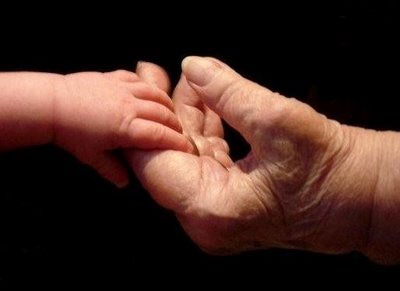
Showing posts with label grasping. Show all posts

Thursday, April 28, 2011

The Yoga of Non-Greed


Here are some notes I made for the presentation I gave last night at yoga teacher training on aparigraha, or non-greed and non-grasping. At the end are some questions you can contemplate and offer answers to - if you're so inclined - in the comments section. Enjoy!

Yoga Sutra II.39

aparigrahasthairye janmakathamta sambodhah

Translation adapted from T.K.V. Desikachar:

“One who is not greedy is secure. He has time to think deeply. Her understanding of herself is complete.”

There are two basic ways greed manifests.
1. Desire for that which you don’t have, or perceive you don’t have
2. Stinginess with what you do have, hording

Wants vs. Needs: This yama really zeros in on our muddy thinking around needs and wants. We frequently mistake want for need, and these mistakes are reinforced by our possession-addicted culture. What is it that you really need in life? And what do you actually own anyway?

Greed and the Material: Those of use that have a lot of “stuff” in our homes and apartments often struggle around taking care of it all. Having more might offer convenience and comfort in the short term, but in the long term, having too much often ends up draining your time and energy.

Greed and the Non-Material: The same can happen to those who don’t have a lot of material possessions, but who lust after ideas, knowledge, or experiences.
Excess time and energy might be spent on, for example, learning every possible variation of trikonasana and the history behind each variation, and then more time and energy spent on defending what you have learned. (Notice the first half of the example demonstrates desire for more, while the second demonstrates a form of stinginess.)

“The final yama in Patanjali's list is aparigraha, or nongreed. This is a very difficult one to practice, surrounded as we are with advertisements that attempt to whip up our desire for more. In some ways our society's economic system is based on greed … Greed is not just confined to material goods. We may hunger after enlightenment, difficult asanas, spiritual powers, or perfect bliss. One way to sidestep the trap of greed is to follow the advice of the sages: Be happy with what you have. This spirit of true renunciation will diminish the power of aparigraha.”

Article by Judith Lasater

Greed and Your Identity: One of the very tricky places where greed manifests is around identity. Think of all the effort you put into building yourself in certain ways, presenting yourself in certain ways, and also in trying to get rid of that which you don’t like or want about yourself. Now, certainly some of this effort is quite necessary for living a healthy, fully engaged life, but some of it is also based in greed. Holding on to certain accomplishments, skills, or personal qualities in order to impress others, fit in with a certain group, or demonstrate your worthiness is one way this happens. Another is in all the attempts to hide disliked or maladapted qualities, lack of skills or lack of accomplishments.

Ultimately, manifestations of greed are really demonstrations of a lack of faith in yourself, and in the divine of the universe. Fearing you won’t be provided for, or won’t be able to get what you do need in the present or future, you take excess or withhold too much.

“By the observance of aparigraha, the yogi makes his life as simple as possible and trains his mind not to feel the loss or the lack of anything. Then everything he really needs will come to him by itself at the proper time.” B.K.S. Iyengar in Light on Yoga

Questions:

What do you really need?

What are some things (objects or ideas/experiences) that you think you need, but actually don’t need?

Where in your yoga practice have you been letting something external define your happiness? Where in the rest of your life?

What can you do differently to practice aparigraha in these situations?

Tuesday, July 13, 2010

Grasping to Let Go


I have heard many times others teaching that grasping at things is, according to Buddhism, the cause of suffering. In the Sandokai, a staple teaching in many Zen sanghas, there is even the line Grasping at things is surely delusion. I can imagine many of you have a negative view of grasping as it occurs in your life. You'd like to diminish it's power over you, or maybe even destroy grasping all together. Last Sunday, our head teacher introduced a koan I had heard once before, and I found myself grasping for some kind of understanding of it. It befuddled me completely. But really, none of us need a koan to feel the intensity, stickiness, and icky feeling of grasping. Food. Sex. Comfort. Ease. I've grasped for all of those. I can imagine you have too.

Grasping is an interesting word. A noun and an adjective, it has several related, but not exactly similar meanings.

In adjective form, it points to desiring to acquire, to excessive wanting of wealth and/or material possessions.

In noun form, there are the following meanings:

1. gripping something tightly with one's hands

2. the activity of managing or exerting control over something

3. understanding with difficulty or after some difficulty

Other than noun definition number three, which maybe resonates with how many Buddhist practitioners experience their lives and practice out there, grasping sounds like trouble. however, I came across the following teaching from the Alagaddupama Sutta that speaks of grasping in a different manner, suggesting that we need to learn how to grasp rightly in order to awaken in this life.

Here is the Buddha speaking to a group a monks:

"Suppose there were a man needing a water-snake, seeking a water-snake, wandering in search of a water-snake. He would see a large water-snake and grasp it by the coils or by the tail. The water-snake, turning around, would bite him on the hand, on the arm, or on one of his limbs, and from that cause he would suffer death or death-like suffering. Why is that? Because of the wrong-graspedness of the water-snake. In the same way, there is the case where some worthless men study the Dhamma... Having studied the Dhamma, they don't ascertain the meaning of those Dhammas with their discernment. Not having ascertained the meaning of those Dhammas with their discernment, they don't come to an agreement through pondering. They study the Dhamma both for attacking others and for defending themselves in debate. They don't reach the goal for which [people] study the Dhamma. Their wrong grasp of those Dhammas will lead to their long-term harm & suffering. Why is that? Because of the wrong-graspedness of the Dhammas.

"But then there is the case where some clansmen study the Dhamma... Having studied the Dhamma, they ascertain the meaning of those Dhammas with their discernment. Having ascertained the meaning of those Dhammas with their discernment, they come to an agreement through pondering. They don't study the Dhamma either for attacking others or for defending themselves in debate. They reach the goal for which people study the Dhamma. Their right grasp of those Dhammas will lead to their long-term welfare & happiness. Why is that? Because of the right-graspedness of the Dhammas.

"Suppose there were a man needing a water-snake, seeking a water-snake, wandering in search of a water-snake. He would see a large water-snake and pin it down firmly with a cleft stick. Having pinned it down firmly with a forked stick, he would grasp it firmly by the neck. Then no matter how much the water-snake might wrap its coils around his hand, his arm, or any of his limbs, he would not from that cause suffer death or death-like suffering. Why is that? Because of the right-graspedness of the water-snake. In the same way, there is the case where some clansmen study the Dhamma... Having studied the Dhamma, they ascertain the meaning of those Dhammas with their discernment. Having ascertained the meaning of those Dhammas with their discernment, they come to an agreement through pondering. They don't study the Dhamma either for attacking others or for defending themselves in debate. They reach the goal for which people study the Dhamma. Their right grasp of those Dhammas will lead to their long-term welfare & happiness. Why is that? Because of the right-graspedness of the Dhammas. [6]


The sutra goes on to introduce the famous simile of the raft, the view that we ride the dharma across the river and then, not needing it anymore, we can let it go.

Translator Thanissaro Bhikkhu writes:


Many a casual reader has concluded from the simile of the raft simply that the Dhamma is to be let go. In fact, one major Mahayana text — the Diamond Sutra — interprets the raft simile as meaning that one has to let go of the raft in order to cross the river. However, the simile of the water-snake makes the point that the Dhamma has to be grasped; the trick lies in grasping it properly. When this point is then applied to the raft simile, the implication is clear: One has to hold onto the raft properly in order to cross the river. Only when one has reached the safety of the further shore can one let go.


It's interesting: in studying the Diamond Sutra with my sangha recently, I never got the sense it was saying we had to let go in the way he says. Maybe I missed it; that's certainly a possibility.

Anyway, for those of us who are practicing or are influenced by Zen, I think it's really easy to read the teachings of the Zen ancestors and conclude that a line like "grasping at things is surely delusion" is the definitive teaching to live one's life by.

Well, as Suzuki Roshi said, "Not Always So."

So, let's look at a rather mundane example of this. You want comfort, right. You want to feel that everything is not only ok, but that it feels "good" somehow. Now, think about it. If you immediately leap to "I shouldn't grasp," then you might be bypassing the opportunity to fully understand what comfort looks like, feels like, tastes like. In other words, you might abandoned the raft before you cross the river, and because you have let go too early, you end up drowning in suffering and confusion later.

Here's the thing: grasping is delusion. And yet it's only through our delusions that we awaken and are liberated. Right?

So, I believe the Buddha is trying to tell us not to shun, bypass, abandon the stories of our lives too early. We have to have patience in other words, something I sometimes do well, and other times not so much.

I've read a lot of stuff about staying with the appearing, intensifying, and disappearing of emotions in the body. A lot of "western" convert Buddhists take these teachings to heart, myself included.

And yet, life is more than emotions, and Buddhist practice is more than just refraining from everything that causes suffering.

In fact, it might be that we have to do a lot of sloppy grasping in order to learn to grasp rightly so that we can let go. Sounds crazy, doesn't it?