Friday, December 3, 2010

Do You Have to "Do" Anything Specific to be a Buddhist?


Scott, over at the buddha is my dj, made a rare, but appreciated appearance in the form of a new post today. Having just listened to the Buddhist Geeks interview with Michael Trigilo about his new film "Bodhisattva, Superstar" two days ago, it was cool to discover Scott's reflection on the movie so quickly after.

Amongst his points, this one struck me:

Most of us know folks who are nominally Catholic — they’re the ones who only go to church on Easter or Christmas. Ask them about transubstantiation and they’ll likely tilt their heads and, at most, mutter something incoherent before changing the subject. Most of us probably know (or are at least familiar with the concept of) secular Jews — folks who are Jewish by birth and maybe they feel some strange familial pressure to have their sons circumcised but they have no qualms about eating bacon. Do they believe in God? Meh. It’s not really an issue. For some reason, these nominally religious folks are given a pass. We’re familiar with them and we don’t press them too much about their religious or spiritual lives.

But in many a Buddhist quarter, as soon as you announce to a crowded room that you are, in fact, “a Buddhist,” invariably the first question someone’s going to ask you is some form of the “do you practice?” question which almost always translates to “do you meditate?” And if, god forbid, you say no, you’re likely to suffer the stigma of not really being a Buddhist.


In the post, Scott writes about how he views his scholarly work on Buddhism as a form of practice, but that he also feels that it isn't sufficient to just do that. But he also questions the mindset that says you must meditate to be Buddhist, which he felt the movie implied is the case.

It might be helpful to note that Scott is a Shin Buddhist, a tradition that really hasn't emphasized sitting and walking forms of meditation.

As I have been bumping up against the question of "what is lay practice?," I find Scott's comments quite fascinating, in part because there are a lot of probably fruitless arguments going on in convert circles about what Buddhism is, and isn't. Everything from searching for an "essential core" of teachings to whether it's a religion or not.

But most of the converts, myself included, reside in traditions that emphasize meditation, and view doing it a lot as essential. I don't think that's a problem necessarily, and certainly I, myself, meditate a fair amount. However, it's not the only way. And my own experimenting, and the sometimes interesting reactions I get to it, show that it's kind of easy to get hung up on forms, forgetting that forms are skillful means that may or may not fit the situation at hand.

Tuesday, November 30, 2010

Buddhist Children? - Thoughts on Children in Buddhist Families and Communities


Over at Cheerio Road, Karen Maezen Miller has a post entitled "not teaching children to meditate" that kind of gets under my nerves. I actually agree with some of what she's saying, and appreciate the experience she has had leading a children's program at a Zen Center, and also as a parent. I'm not a parent, so I sometimes feel like stepping in on issues like this aren't my territory.

At the same time, I have had multiple jobs working with children, spent three years as a teacher in our zen center's children's program, and am currently in the middle of a lot of discussions about the place and role of children and youth within our sangha. All of this gives me a small window of perspective. I'm not expert, but I'm also not someone who has no experience with kids, and just wants to pontificate. So, whatever I will say is coming from a somewhat outsider position, and I'd encourage parents who are Buddhist practitioners to chime in on this issue.

Of the comments in the Cheerio Road post, these are the one's I probably most bristle at:

About the spiritual training of young, my view is a bit of the same. How you behave in your home is their spiritual upbringing. I think we have to be careful with all forms of ideological indoctrination, and that is what spiritual training is in children: the imposition of a set of abstract beliefs and ideals. Children will take these from of us, but I don’t think dogma serves anyone for long. After all, I was a very good Sunday School student, the star of my confirmation class, and yet I had my own spiritual crisis to resolve later in life. We all do.

I always remind myself that I’m not trying to raise a Buddhist child. I’m trying to raise a Buddhist mother, and it’s taking all my time! Not only my family, but also everyone everywhere will be served by my devoted discipline in my own training. Not because I’m self-important, but in recognition of the one true reality: no self. We are all interdependent, which means we are all one.


Before I speak about my disagreements, I will say that above all, the behavior of adult mentor figures, whether parents, extended family, teachers, or others, IS of most importance. So, we agree there.

Now to the areas of contention.

1. The Sunday School example - it's no secret that many convert Buddhists grew up and/or had significant contact with Christian or Jewish communities. They have parents and/or grandparents who are, or were, devout Christians or Jews, and who forced them to attend regular religious instruction as a child, instruction that was often about feeding children a worldview that had to be accepted as true. So, there's an understandable desire to not repeat those experiences with their kids. However, how much of this concern over indoctrination valid, and how much is a reaction to what they experienced in Judeo-Christian settings?

2. Uber-Individualism - Buddhists in the "West," especially convert Buddhists, struggle with building long lasting, sustainable communities. Children and teens aren't always welcome, let alone considered vital members of the sangha. But beyond Buddhism, community in general is quite challenged in places like the U.S. Whereas in the past, friends, neighbors, and community elders were all to some degree or another considered part of the extended parenting family, today for most children, these people are often viewed with suspicion. Teachers, spiritual leaders, and other community leaders are also viewed as much with suspicion as being potentially good influences on children. Now, certainly there are valid reasons for some of this suspicion, and I think it's quite important for parents to be careful and minimize risks, but how much of the breakdown in community in general is due to obsession with the nuclear family, and an excessive focus on individuality?

When I think of the Karen, Korean, and Vietnamese Buddhist students I have had, all first generation immigrants, the picture is different. The children are cared for by extended family and neighborhood elders, they regularly attend Buddhist services with their families, and they are considered to be an important part of the sangha. This doesn't mean that these children have perfect lives - sometimes far from it - but whereas native born Americans struggle with community, immigrants and refugees tend to have thriving communities, religious and otherwise.

3. What does a healthy lay practice look like? One of my favorite questions these days. Adam over at Fly Like a Crow also has children, and his commitment to practice looks quite different than Ms. Miller's. I don't think one is right, and the other wrong. What I'm more interested in is about the different ways people can manifest deep practice while having a family and/or living in the world. It's wonderful that Karen Maezen Miller is a devoted Zen priest who not only helps lead a center, but also shares writing regularly about her practice with the world at large. But I think devotion will take different forms, just as how people raise children takes different forms. Even if more people examine the issues I spoke of in points 1 and 2, how they decide act on those examinations will look different in each case.

In other parts of Ms. Miller's post, she argues that children have a natural ability to be present. That they already "practice single-minded attention." And about Buddhist practice in general, she states:

The aim of all Buddhist practice is to return to our natural state of wide-eyed wonder and unselfconsciousness that we can observe in our children many times a day.


I don't agree. Childhood openness is wonderful and beautiful, but is it what "the aim" of Buddhist practice is? First of all, when I think of my own childhood, that wonderful openness she is speaking about was there, but sure as hell not always. And sometimes, rarely. Some of the time, at least, I was completely trapped in fear or anger, which stunted any curiosity or openness. I often acted out of convoluted views about both my own life and the world around me because I was - a kid. I didn't know any better. That's what kids do. And when I was in that more open, perhaps "pure or "natural state" - well, I was there, but I had no idea how to bring those experiences to bear on the rest of my life. Perhaps if I had been in a class where things like meditation and basic Buddhist teachings were taught, things would have been different. Or maybe not. But from what I have seen with the children and teens in my own sangha, they're ability to handle life's difficulties, to transfer that natural openness into the areas where they get closed down, is more advanced than what I displayed as a kid without a sangha.

This gets to my final point. In our sangha, we have a children's and youth program that not only teaches meditation, but also some of the basic Buddhist messages, such as the Four Noble truths and Eight Fold Path. The kids learn variations on the Buddha's life story, and have opportunities to explore it all through arts, crafts, discussion, meditation, yoga, and sometimes service projects. Some might say this is indoctrination, but my own experience as a teacher in the program was that it was about exploration, providing some structures and support for exploration.

And that is probably the main reason why I felt compelled to write all of this. Structures like zazen, chanting, and bowing can be offered as opportunities to explore ones life at an early age. Basic Buddhist teachings can be offered in the same way. If you are a Buddhist parent who is more in line with what Ms. Miller says, I'd like offer the following question: What is motivating your views? I don't ask this because I think you are necessarily right or wrong. It's more a question I think is worth exploring.

A few weeks ago, I spoke of our center as developing a "lifespan" practice field. We have always attempted to program not just for adults, but also for children. And in recent years, we have been starting to think more deliberately about what this means, and how we might better support people in all stages of life. So, I'm interested in what parents think out there. How do you work with children? How should sanghas work with children? How does your sangha in particular work with children?


*The image is of the banner of photos for our center's children's program. I thought about finding something else after I saw the distortion, but actually think it fits well as a visual with the discussion at hand.

Monday, November 29, 2010

Being a Loving Parent to Your Delinquent Qualities


Feeling tired, but not ready to sleep yet last night, I turned on the radio to discover a rebroadcast of this interview with the Irish poet and philosopher John O'Donohue. As the program went on, I found myself more and more interested, and then was sad to hear that he had died. This morning, I discovered he died in his sleep at age 52, entirely young in modern terms. I barely knew his name before 10 o'clock last night, and yet somehow I wish he were still around, but also thankful for whatever he did give to the world before going.

Here is a quote that seems quite pertinent to my life right now. Perhaps yours as well.

"If you try to avoid or remove the awkward quality, it will pursue you. The only effective way to still its unease is to transfigure it, to let it become something creative and positive that contributes to who you are.
Nietzche said that one of the best days in his life was the day when he rebaptized all his negative qualities as his best qualities. Rather than banishing what is at first glimpse unwelcome, you bring it home to unity with your life…..One of your sacred duties is to exercise kindness toward them. In a sense, you are called to be a loving parent to your delinquent qualities"
— John O'Donohue (Anam Cara: A Book of Celtic Wisdom)


If you're like me, when you look at yourself, you probably see a lot of those delinquent qualities. Everything from little quirks that feel awkward to larger patterns that seem to be grave flaws. Even if you're also good at noticing what's going well, and/or what qualities are beneficial, it still can be challenging to really face this other stuff, and let go of any agendas for it.

How often have you embraced your habit of interrupting others during conversations, or your pattern of dating people who aren't "good for you," only because you hope that the embrace with change it? Or how often have told others you are "getting better" with taking risks not because you actually are, but because you hope that saying it will help bring the change around?

Agendas are tricky things, but whatever they are, they are not the qualities present in a "loving parent." After awhile along the path, things like avoidance and acting out are easier to spot. You might still do them, but you tend to know you're doing them - or see it much more quickly than before. Those are gross agendas. But the more subtle ones, like the two in the questions I posed above, they're not as easy to spot.

Transfigure is an interesting word.

to give a new and typically exalted or spiritual appearance to : transform outwardly and usually for the better

In a way, it sounds like another attempt to lie. To deceive. When I saw that definition, an imagine of a friend of mine sitting with a plastic smile on her face during an event she didn't want to attend arose immediately. That smile was about hiding; she told me as much.

But when I reflect on transfigure further, it brings to mind the ritual of placing one's robe on before meditation. The rakusu, the kesa - they symbolize the buddha within, and the way of being a buddha in the "outer" world. (Outer and inner are really just distinctions of the relative world.) Placing the rakusu on my head, I chant the following, and then unfold it and place it around my neck.

How great, this robe of liberation
a formless field of merit,
wrapping ourselves in Buddha's teachings
we free all living beings.

The rakusu is just a piece of sewn cloth, and yet if you look at that verse, it's also a transfiguring. Ordinary being to Buddha. With nothing excluded.

I don't particularly like

the longing for a healthy, long term romantic relationship
the indecision over next steps in my professional life
the feelings of inadequacy around being unemployed
the awkwardness of being a non-driver in car-centric culture
the lack of calling towards meditation retreats I'm experienced as a somewhat "seasoned" Zen practitioner
the lack of connection I feel with the Thanksgiving and Christmas season
the desire for light in this mostly dark time of year
the conflict avoidance I still give into sometimes
the lust and desire for sex and the loneliness behind it
the failures to "stand up for myself" in certain situations
the desire to "fit it" or at least not stand out
the attachment to political views and anger that sometimes comes from it
the fears of failure and the risks not taken because of it

but putting on that rakusu is an act of transfiguring all of that, without any agenda. It's moves all of this, as well as anything I think is a wonderful or beneficial part of who I am, beyond good and bad, beyond needs of removing or enhancing.

And I can put that rakusu on in every moment if I choose to - but more often than not, I simply don't choose to. Or I put it on out of a desire to hide behind it, to look holy or spiritual instead of whatever it is that I actually am. The line between these is sometimes very thin - a place worthy of investigation.

How do you work with delinquent qualities? Certainly, many of you reading this blog could say meditation, but what a pat answer that would be. All of this I've seen about the rakusu is from my meditation practice, from putting it on my neck over and over again. But it's in the details that one locates the loving parent.


* Sculpture is "Trans-Figure 1" by South African artist Dylan Lewis.

Saturday, November 27, 2010

Black Friday, and the Difference Between Expressions of Love and Expressions of Inadequacy

I was going to skip the commentary on all that Black Friday, holiday shopping madness, but then I stumbled upon this post, and felt compelled to say something.

The author of the post suggests the following:

1. The buying frenzy and subsequent Christmas gift exchange excess are products of a consumerist culture.

2. That Americans, at least, don't have enough joyful holidays, and thus try to stuff all their celebration into this time of year.

3. That those of us who find the consumerist expressions of this season crass and devoid of meaning should suspend our judgment of those sucked into it.

4. That those sucked into the buying and giving frenzy are manifesting love in their own ways.

It all sounds well and good. I'm inclined to go along. Except...

Consider this section of the post:

We live in a consumer world, one where love is often shown through purchases, one where people want to express their deep love for their families by buying them flat-screen plasma TVs and ten-dollar Old Navy sweaters. It is love and that is the form love takes.

The frenzy comes from the fact that Americans don’t have enough holidays, don’t get to celebrate enough. As a pagan I have eight great high holidays a year, all equal in measure, all equally important and significant to the turns of time on this Earth. But most people have all of their main holiday joy packed in to one mad season which has to bear the holiday longings of an entire year. Please go easy on them. Recognize in them a light of love that is bent through the prism of a consumer world, one that not only mediates love for us but also gives us a common, sometimes cheesey language to express it in.


I agree with most of what the author is saying, and yet something is off. All this buying of stuff, often things people don't need or even want - "It is love and that is the form love takes." That strikes me as false. A kind of nice sounding gloss over of what's really happening.

The way I see it, one of the mechanisms of a consumerist culture is to instill inadequacy in people so that they will want more, and buy more. And I think over the years, this inadequacy runs so deep in many people that they feel compelled to give others something of monetary value - often large monetary value - in order to feel ok about the relationship. You want to have a happy spouse - you better give her an expensive ring. You want to have happy children, you better buy them the latest video game machine. You want to keep your friends around, you better buy them some fishing gear, or a new dress, or something worth something.

There's no doubt that people love each other, and want to express that. In fact, it's not even about giving gifts - which is beautiful when done wisely - it's this idea that what's happening at these door buster sales at Wal-Mart and Macy's is all about love. That's bullshit!

How often do you hear it from people towards the end of their lives - that what they want now, and maybe what they wish they had more of in the past, was more time with their loved ones. To tell stories, eat together, walk together, or just sit in silence together. All that stuff amounts to nothing in the end, and people know it deep down.

What I see in the folks buying cheap flat screen TVs, ugly sweaters, ties, useless plastic nick-nacs is a failure to experience love. They love their friends, family, and lovers, but what they are mostly expressing is a need to keep the relationships, to be a "good person" who gives to their loved ones. Sometimes, there is guilt there. Sometimes, there is a sense of duty there. Sometimes, there's a hope that whatever they give will appease their loved one for awhile. But all of it goes back to staving off that feeling of inadequacy, of not "being good enough," for awhile.

Those who actually allow themselves to experience love know how to respond to their loved ones. They override what the dominant culture is telling them to do, and listen for the opportunity to give wise gifts, and then do so. And if they give during this time of year, they do so having reflected upon their loved one first.

Recently, my father made some large bookshelves for my sister and her boyfriend (see above). With the new baby, and a need to make better use of their space, some good bookshelves meant a lot. And that my father actually made the bookshelves himself, taking the time and care to see that they'd fit the space and be functional, meant even more. This to me is an example of wise giving.

Going back to the article I linked to, here's a little more:

If you are looking for quiet this season, remember that quiet can be sought in your heart. It comes best from releasing judgement about how other people do their Yuletide: releasing judgement about the tack and the madness, but to see in everybody that same deep and utter ancient longing for light and warmth, and an impulse to give to others. For many of us, and I do say us, that raw impulse is translated through the media of consumerism, of the mall and the big box store. People work with what they have to work with. The understructure is still the same.


Yes. Releasing judgment of the individuals in your life is vital. That's a core part of a spiritual path in my opinion. However, I also believe that those of us who see the deep damage being done by excessive consumption - the economic yo-yoing, the human exploitation, and environmental destruction behind those TVs, Old Navy shirts, and whatnot - must learn how to express ourselves better with those who don't see it. We must be brave enough to share what we have learned, and share our wishes for the world, with our family, friends, and lovers, even if it causes confusion and upset in the short term. But most of all, we must take the gifts of our meditation practice, our sutra studies, our bowing, our chanting - we must take that and apply it to whatever we say and do around the holidays so that we can express the truths of our lives without placing unneeded an unwanted expectations on others. In other words, we can tell the grandmother who buys us a pile of junk every year about what we most want, and our dreams for the world around us, but we can't demand that she change. And if what we get is more junk from her, then we have the opportunity to accept that junk openly, knowing that we haven't held back.

In my view, a lot of this "not judging others" talk in spiritual communities located in consumerist cultures is tied to the very same inadequacy that drives others to compulsively shop. This "oh, don't judge" voice is often just a cloak spiritual types wear out of a hope that others will like them, see them as "good people." Sound familiar? Think about it. How often do you find yourself biting your tongue instead of saying something that might upset a loved one? And how often does that same comment get labeled a judgment, even if it might just be an observation? This is one of the places I think Marshall Rosenberg's work with Non-violent communication is helpful. Because my own experience has shown me that often when I'm biting my tongue it's driven not by loving patience and wise consideration of the other person, but by a fear that whatever I say will drive the other person away. Or make them see me as a "lesser person." It's no better, really, than impulsively buying them an expensive toy they don't need.

Recently, I commented on a sangha friend's Facebook page that we should move Thanksgiving to another time of year, and reshape the holiday fully around gratitude. Divorce it from it's genocidal past, and perhaps also from it's genocidal present (i.e. turkey murder). As the author of the post I'm writing about said, we Americans need more holidays of joy. Re-framing Thanksgiving could be one way to offer people a chance to express love without piles of material gifts. Some already use it in this way.

Now if only I could figure out a way to liberate all those turkeys...

Friday, November 26, 2010

Bone Deep Fear as a Planetary Exprience


I took a trip over to the website of a long time favorite Buddhist teacher of mine, Joanna Macy. Continuing the theme from Wednesday's post, as well as circling it back to the struggles we have individually to truly open to interconnectedness, here is a selection from Macy's living systems writings:

It helps to recall that in the course of our planetary journey we have gone through positive disintegration countless times. The life living through us repeatedly died to old forms and old ways. We know this dying in the splitting of the stars, the cracking open of seeds in the soil, the relinquishment of gills and fins as we crawled onto dry land. Our evolution attests to this, and so does our present lifetime, as we learned to move beyond the safeties and dependencies of childhood. It is never easy. Some of the uglier aspects of human behavior today arise from fear of the wholesale changes we must now undergo.

To let ourselves feel anguish and disorientation as we open our awareness to global suffering is a part of our spiritual ripening. Mystics speak of the "dark night of the soul." Brave enough to let go of accustomed assurances and allow old mental comforts and conformities to fall away, they stand naked to the unknown. They let processes which their minds could not encompass work through them. Out of darkness, the new is born.


As the winter cold and darkness settles in, I find that disorientation quite palpable in my life. Some anguish too, but more disorientation - a sense that I'm walking down a road after having been spun around. Buddhists like to talk about change and impermanence, and yet how often it is that our minds lag behind, sometimes far behind, whatever is occurring? I can feel myself wanting to know what's happening, and what's going to happen next, but all that wanting just keeps me away from it. Whatever "it" is.

Positive Disintegration is an interesting term. It points to the fact that what our minds see on the surface doesn't account for the wholeness of experience. It suggests that the ice and snow that has come, and killed off yesterday's field of carrots and the rabbits that stayed on too long to nibble, isn't a menacing end point. In fact, I think it points to the fact that we don't understand the ice and snow at all.

There are rumblings of war in Korea again. And certainly a deep level concern that the dictators running the North will finally lose it, and unleash nuclear weapons on the South. Menacing is a fair word to apply to all of this as well, and yet even here, we don't truly know what the conflict on the surface is leading the world to. Since I was a kid, listening to U.S. President Ronald Reagan blathering on and on about the "Evil Empire" and it's nuclear capacities, I have had a gut-level hatred of warfare. It was beyond the awfulness of the human injuries, casualties, psychological misery, environmental destruction, and astounding economic waste that come with "regular" warfare: it was all about survival, and a fear of everything we know disappearing. A menacing endpoint.

And yet, even though the horrors of nuclear war are possible, and people should do whatever is possible to avoid it, I find myself also looking at the sky. How many of those stars are already gone, imploded long ago, the light only reaching us now? How many others have been born, and are flourishing, but whose light have not yet come?

I find myself still afraid of the "wholesale changes that must come" in my own life - partly, maybe mostly because I don't know what they really are. How much more so is the compounded fear emanating collectively from humanity around the changes the world itself, perhaps the greater solar system and beyond, is calling for us to make - changes we don't understand, can't put a finger on, and probably won't live long enough to name?

Wednesday, November 24, 2010

Reflections on a Buddhist Environmentalism


Discussions and modern Buddhist teachings often feel a little too human-centric. Plenty of talk about interconnectedness, but not much movement beyond the human sphere of affairs. Obviously, being people, we're going to have a disposition towards people. There's nothing wrong with that. My own blog is pretty human centric, whether it's reflections on my own life and practice, or on social and sangha issues.

But perhaps the deep, disturbing disconnect that enough folks have these days, and which has led to environmental pillaging and poisoning, has also seeped into the way we view the dharma.

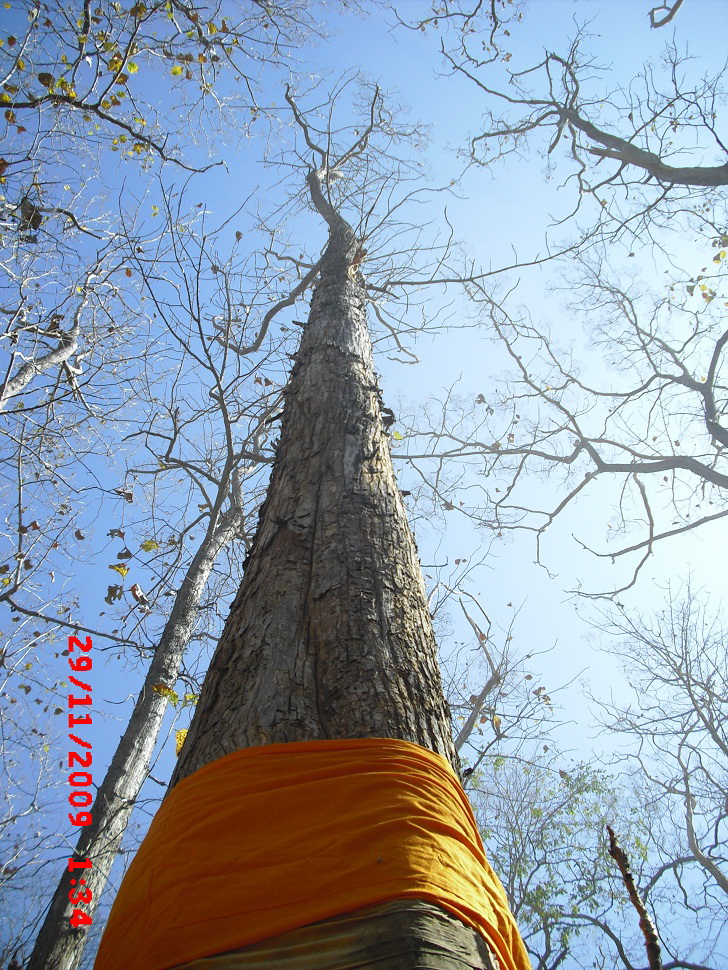
During a recent interview, Thai Buddhist teacher and activist
Sulak Sivaraksa said the following:

in the late 1960’s, the World Council of Churches requested that the Buddhists teach them. I shared everything from Buddhism. I taught them that living beings are not only animals, but also plants and trees, and that we must care for all. We are all interconnected; we are taught that without trees we could not live. The Buddha himself told us to look at trees as examples. Of course, the Buddha himself was one with the trees. He was born under a tree, enlightened under a
tree. He preached at night under the tree. He died under a tree. The tree is very important to us, and we must care for the forests and for the environment.
In my country, we have a movement for ordaining trees. Once trees are ordained, they cannot be cut. This movement helps to preserve trees. Max Weiner is a monk who has helped to spread a trend which is to ordain trees. He was from Harvard. When the tree is ordained,


Between 1936 and 1973, Thailand lost more than half of its forests. Similar patterns have occurred more recently in many other nations, including notably Brazil, where big agro-business has replaced rain forest with soybeans and other cash crops, and Ethiopia, where diversely forested areas were converted to coffee plantations. And historically, places like the northern United States, where I live, had forests that were almost logged to extinction in the name of profits and human-centric building ventures. All told, human relationships with trees over the past few hundred years have been quite off, to the point where many of us forget the simple fact that trees are major players in converting the air we breathe into breathable form.

One of the reasons why the environment in general, and trees in particular, have been forsaken - in my view - is the disappearance of, or lack of connection to, narratives speaking to the interconnection of people and the environment. Although scientists have done a fairly good job of detailing the many ways people have damaged and sometimes destroyed parts of the planet, what they have learned hasn't really been translated into the kinds of living, breathing stories our ancestors lived on.

The Buddha's story is one of those narratives, one that doesn't need to be updated in order to be powerful. His life was amongst the trees, touching the ground with every step. However, perhaps those of us who live in cities, are sheltered in buildings all day, spending hours on computers, sitting zazen inside, struggle to connect with the fullness of Buddha's experience of interconnectedness. Because of our many physical disconnections, our psychological and spiritual awareness is also cut off - not quite awake to the immensity of the world.

Dean's current post over at The Mindful Moment speaks of his experiences meditating in a cave. From what he writes, it's seems he felt this immensity while being there. However, what happens to that awareness a week, a month, a year after returning to the human-focused, human built "everyday" environment. I have had similar experiences to what Dean describes. I remember the awe I felt sitting on a cliff overlooking the Atlantic Ocean on the Aran Islands. And the sense of how tiny I am while going through the California desert. Wonderful experiences, but ones that tend to get drowned out by life in the city.

But this is beyond a city/country divide. I can go out less than an hour in any direction from the city I live in and find large scale farms loaded with poisoned plants and abused animals, sitting on land that was, a hundred years ago, entirely forested.

Tree ordination seems like a damn good idea in my view. Not only to protect the trees from human greed and stupidity, but also to remind people of a sacredness that is beyond ourselves, and whatever we think we need to live.

It's seems to me, as modern practitioners of the Buddha way, it's essential that we learn how to embody interconnectedness fully, and to act accordingly. And I think in order to do that, the ways we talk about the dharma, teach the dharma, must move beyond a human-centric approach. Just look at the words of the old masters. It's there. They got it. And now we have the work of scientists and environmental activists offering the fodder for new stories, and new ways of being and acting.

Some are out there doing just this. But more of us must take it up, to move beyond pessimism and despair. To make the dharma anew, one more time.

Monday, November 22, 2010

Playing with Formal Buddhist Practice


I've grown quite fond of Buddhist teacher Larry Rosenberg, who's book Breath by Breath, about practicing with the Anapanasati Sutra, our sangha studied this fall. He seems to do a great job of balancing daily life and everyday practice, with the deeper wisdom of our tradition. I love that he has enough looseness around meditation retreat practice to both advocate for it, and also see that it's not the only way in. Brilliant!

During an interview Rosenberg gave several years back, he said the following:

The message of my own teaching involves a certain boldness or directness. My feeling is that a number of people who are strongly committed to meditation are afraid of life, or afraid of relationship, or afraid of work on some level. But in my view, dharma practice is not to hide. It is not to become a hothouse plant—thriving only in a protected environment—it is to jump into life.


I was quite afraid of my life when I began practicing Zen a little under nine years ago. And in the formal meditation and ritual-heavy environment I arrived in, it wasn't long before I dived into practice, and also into hiding behind beautiful Zen words, concepts, and hours of zazen. There's no regret left for those early years, but I can see how I believed that if I sat two hours a day, did retreats and all the classes offered, I'd somehow magically be transformed into a healthier, wiser person.

I discovered a few years ago that the daily life piece is not easy to teach. There is an intrinsic difficulty that comes from the fact that all these people are running around in a notoriously intellectual environment like Cambridge and are not meditating much. My job is to constantly remind them about dharma... dharma… dharma. But also many people basically lack conviction that daily life really and truly is as valuable as, say, the walking or sitting practice. And it is; it really is. It’s not better than. It is not worse than. It is just as much of a problem to set the spiritual life above daily life as it is to consider daily life the acid test for your spiritual practice. There’s just your life, period.


In recent years, I have given over to a lot of experimenting. It's become very clear to me that without some formal form of daily practice, things start to go to shit. But what does that formal form look like? This is where I'm not a purist you might say. One day last week, the formal form was 108 full bows, offering bodhisattva vows with each bow. It's a quite rigorous practice, one that doesn't allow for much wandering mind. (If you mind wanders much, you fall over while bowing, and forget to say the vows). Another day recently, I did chanting and kinhin (or walking) practice, saying the Jizo mantra with every step. Last night, I just sat an hour of zazen, nothing fancy at all.

I have come to feel that it's important to learn how to read where you actually are, and then have enough formal tools in your basket, so that you may give an appropriate response to the situation at hand. Chanting, bowing, kinhin, and zazen are all time-tested formal forms - each one a gate with a slightly different energy and quality to them. As Rosenberg suggests above, it's vital to have regular formal practice going on in your life. It's the balance point. What I'm offering is the element of play and experimenting, to take the various forms of your tradition, enter into each, and see what happens. One woman in or sangha has developed a rich Zen sewing practice, and is now studying with the wife of Katagiri Roshi, who also views sewing as a central practice.

There's a lot of other good stuff in the Rosenberg interview worth checking out. And his book is quite excellent; I highly recommend it.

But most of all on this Monday morning, I want to encourage you to experiment with your formal practice. To play with what you've been given. And in doing so, maybe it will soak into your bones in ways you can't even imagine.